Little Wagon Family in the News

Who doesn’t love their picture in the paper? Especially when it recognizes a milestone in your life or the work that you do. So here’s a recap, in news clipping pictures, of Little Wagon Produce Family in the news from the past few months.
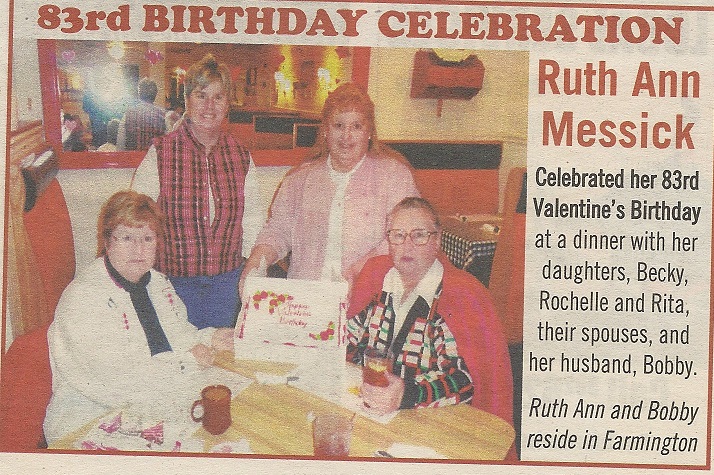
Mom-Mom Messick turned 83 on Valentine's Day.

Mom-Mom Messick turned 83 on Valentine’s Day.

Uncle Doug & Jesse (cousin) were in the paper this winter because Doug nominated the Kiwanis group for a $2,500 award through the "America's Farmers Grow Communities" program. The money has been earmarked for students in the Woodbridge FFA chapter. Jesse accepted the check as Kiwanis President.

Uncle Doug & Jesse (cousin) were in the paper this winter because Doug nominated the Kiwanis group for a $2,500 award through the “America’s Farmers Grow Communities” program. The money has been earmarked for students in the Woodbridge FFA chapter. Jesse accepted the check as Kiwanis President.

Bethany (cousin) just finished her freshman year at Misercordia University in Dallas, PA. She ran fall cross country, winter track, and spring track.

Bethany (cousin) just finished her freshman year at Misercordia University in Dallas, PA. She ran fall cross country, winter track, and spring track.

In April, Pop-Pop Bill received the "Delmarva Distinguished Citizen" award from DPI (Delmarva Poultry Industry). He was recognized mainly for his board service on the Sussex Soil Conservation District (which provides support to Sussex poultry growers).
In April, Pop-Pop Vanderwende received the “Delmarva Distinguished Citizen” award from DPI (Delmarva Poultry Industry). He was recognized for all of his contributions to agriculture but mainly for his board service on the Sussex Soil Conservation District (which provides support to Sussex poultry growers).

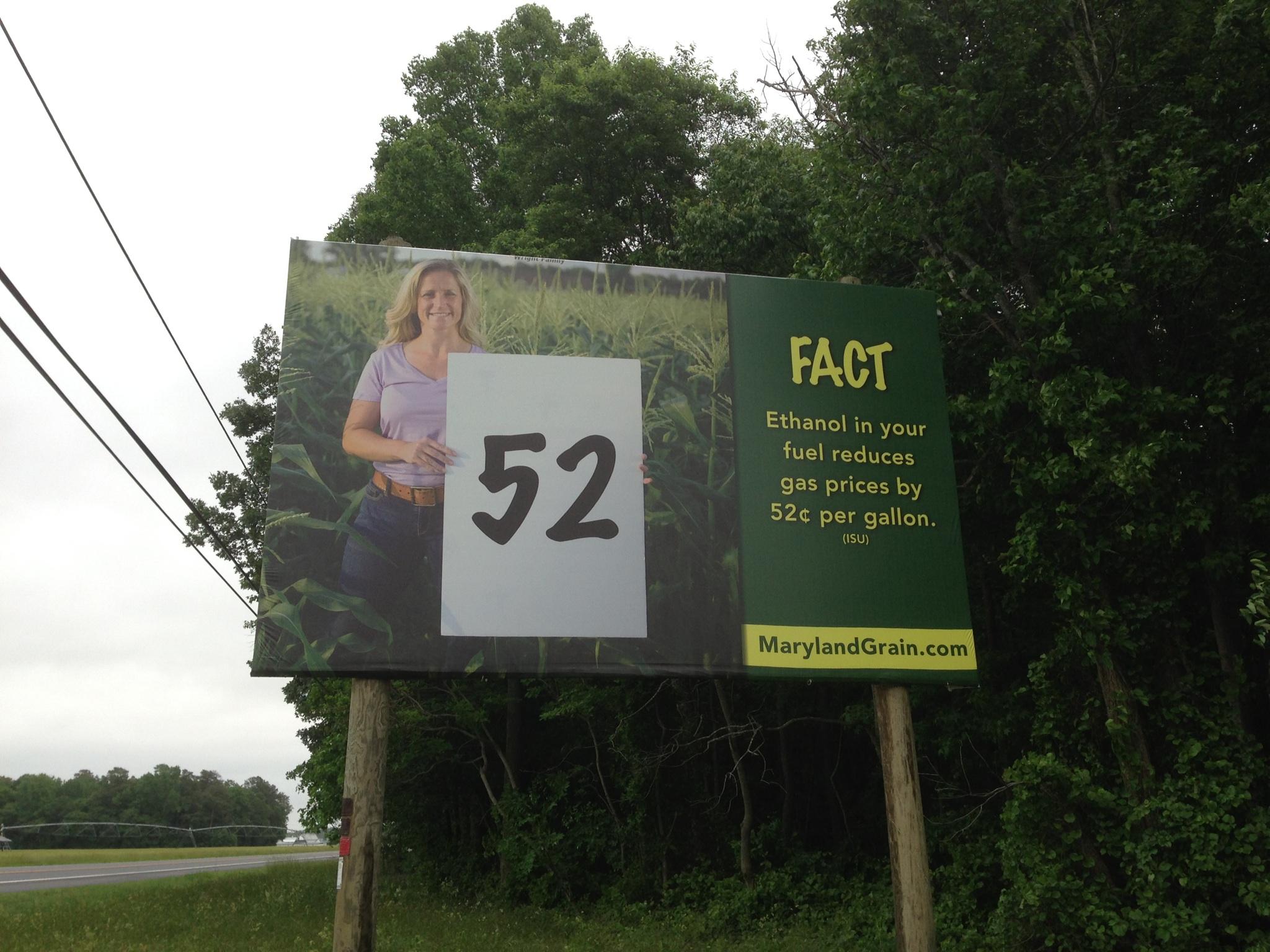
Not exactly a newspaper, but I found out through family that my face is plastered to this bilboard on Rt 404 east. Not sure how many beach tourists know that ethanol comes from corn, which I'm standing in front of but maybe they'll get the point. Or maybe they'll google it when they see how much gas has gone up in recent weeks.

Not exactly a newspaper, but I found out through family that my face is plastered to this billboard on Rt 404 east (in MD near Rt. 313 exit). Not sure how many beach tourists know that ethanol comes from corn, which I’m standing in front of, but maybe they’ll Google it when they see how much the price of gas has gone up in recent weeks. Maryland Grain Producers paid for this advertising and there are other billboards on the Eastern Shore promoting agriculture. Apparently ethanol contracts for July are running almost $1 cheaper per gallon than gasoline, making ethanol blends even cheaper than the 52 cents mentioned here. You may see the video ad in this article on national news this Sunday.


Joint Agriculture Committee Update-Part I

After my post this week on HB 282, I realized there’s nowhere to find Delaware Ag Committee minutes unless you actually attend the meetings. What farmer or agvocate has time to do that, especially in the spring, when planting is top priority? And none of our media outlets cover these meetings regularly. I don’t always have time to go either, but I’m usually attending some other committee, so occasionally I can slip in. Therefore, I’d like to share the minutes of two previous Ag Committee meetings in March. These convened as “Joint Agriculture Committee” meetings, meaning the individual House and Senate Committee members came together as one. I’ll give you a short summary in a two-part series.

*************************************************************************************************************

At the March 21 meeting, Secretary Kee seemed to lead the agenda (not the Chairs) and announced three pieces of legislation his department would like to implement in the near future:

  1. Replace one of the poultry representatives on the nutrient management commission with an equine industry representative (HB 282, which passed the House yesterday).
  2. Increase in the pesticide registration fee that manufacturers pay to the Dept. of Ag. (HB 321, just introduced Tuesday).
  3. Increase the fine for those who misuse pharmaceuticals in the thoroughbred industry. A second component to this would be an increase in license fees.

An update on the Young Farmers Program (YFP) was given. There are currently 10 young farmers with a total of 903 acres of land in the program. The State will loan up to $2.7 million at zero interest for them to buy their first farm. The farm will then remain in the Ag Lands Preservation Program (ALPP). In regards to this topic, the Secretary also mentioned the fact that the State has proposed to provide less funding to the ALPP, from $7 million to $1.5 million and to the YFP, from $3 million to $500,000.

In the poultry field, Secretary Kee gave an update on the Harim group, who bought Allen Family Foods. They have been operating profitably from week to week and may add another shift, which could provide more in state jobs. The Secretary then requested help to support the University of DE’s Lasher Lab in Georgetown, which is crucial to our state’s poultry industry because of its role in testing disease in Delmarva poultry flocks. They need $500,000 to continue their work. Several poultry representatives provided public comment to re-emphasize the needed support.

Legislators present were Chair Bunting (Senate) and Chair Atkins (House); Representatives Quinn Johnson, Harvey Kenton, Rebecca Walker, and Dave Wilson; Senators Bruce Ennis, Bob Venables, and Gary Simpson.

Who wasn’t there, but belongs on the committee? Representatives Bill Carson, Jack Peterman, Bobby Outten, Michael Mulrooney, and Senator Joe Booth.

Always interesting to see who attends and who doesn’t. Stay tuned for Part II soon……

Proposed Changes to DE Nutrient Management Commission

It’s hard to find a poultry farmer in New Castle County, which makes it hard to fill the Nutrient Management Commission. And so became House Bill (HB) 282, which changes the composition of the Commission.

As with many state boards and commissions, the Delaware Code relating to this Commission is very specific and can be very confusing. Bear with me! Currently, there are 15 total voting members on the Commission. One is the Director of the Division of Watershed Stewardship for DNREC. The 14 others are appointed by various elected officials. Of the 14 appointed, 7 must be full-time farmers. The 7 full-time farmers must be divided by county. For example, 2 must be full-time farmers from New Castle County, 2 from Kent County, and 3 from Sussex County.  Even more specifically, the 7 full-time farmers must consist of:

  • 1 dairy farmer
  • 1 swine producer
  • 3 poultry farmers
  • 2 row-crop farmers (1 grain and 1 vegetable)

If enacted, HB 282 would remove 1 poultry farmer from the Commission while adding 1 equine operation owner.  Currently, Delaware’s equine industry has no representation on the Commission. I’m assuming this change will cater to New Castle County because of a lack of poultry, swine and row-crop farming. In other words, representation for this county would have to come from the dairy and equine industries. While I understand the desire for representation of the equine industry and every county, I have concern for the representation of less poultry farmers. The fact is clear: poultry is Delaware’s #1 agricultural commodity. Of Delaware’s cash farm income, 73% was from broilers in 2009. We are 8th in the nation in the value of broiler production. As a matter of fact, broiler production began in Delaware. Need I say more?

Yet, this industry (and all of agriculture) is under pressure from federal regulation and environmental activists who say we need more rules for animal waste (i.e. nutrient management). Take yesterday’s DE State News, for example, which featured a guest commentary from a Washington DC environmental guru who blames agriculture as the top single contributor of nutrient pollution to the Chesapeake Bay. She cites poultry farmers specifically, claiming they grow too many birds and produce too much waste without controls on waste disposal. This is exactly the duty of the DE Nutrient Management Commission: to regulate activities involving the generation and application of nutrients in order to help improve and maintain the quality of Delaware’s ground and surface waters and to meet or exceed federally mandated water quality standards, in the interest of the overall public welfare. Therefore, I would advocate for more poultry farmers on this Commission; not less.

Have all other options been properly considered? Could the county representation requirement be changed? In other words, maybe there should only 1 full-time farmer from New Castle County represented? Perhaps the swine producer should be removed? I could be wrong, but I haven’t seen a large-scale pig farm in Delaware in a very long time (1980’s?).

DISCLAIMER: I guess I should go straight to the source. My grandfather co-chairs the Commission. I also have 3 family members who are poultry growers. I’ll do my homework. Until then, here’s a link to a list of members from the DE Dept of Ag website but it’s not current. This also made me wonder: Does the poultry industry have a registered lobbyist in Delaware to advocate for poultry growers in our state?  I looked it up under the Public Integrity Commission website. The answer is yes. It’s Bill Satterfield from the Delmarva Poultry Industry. I read their March 2012 newsletter, which explained that all current legislative efforts are focused in Maryland because of the dozens of bills that could affect the MD poultry industry. Too close for comfort, if you ask me……

“Smart Growth” in Delaware

It was so refreshing to attend the 4th annual DE HEAL summit today in Dover. HEAL stands for Healthy Eating & Active Living and is a coalition of 200 individuals who want to improve the health of Delaware. The theme of today’s summit was “Impacting Obesity through Environmental & Policy Changes”. Words I heard throughout the day were: land use planning, complete communities, walkable, bikeable, smart growth, open space, built environment, healthy living and more.

How does this topic relate to agriculture? Obviously, farmers are the key to providing the fresh food necessary to decrease obesity rates. But also because the idea of farmland preservation fits in perfectly with the idea of “smart growth“. There are individuals  and groups who are currently advocating to make communities more livable, INSTEAD of creating more developments on more land (also known as sprawl); leaving more space open and family farms intact. One such group is DE Greenways.  I sat in on their breakout session today and learned more about the work they’re doing in the Rehoboth Beach area. They are essentially helping to “retrofit” the land already developed at the beach to make the area more livable. How? By connecting existing roads and trails, creating bike and pedestrian friendly areas, and communicating these areas to the public. Ever heard of the Breakwater Junction Trail? DE Greenways advocated for this 6 mile trail, which connects Rehoboth and Lewes.

There is definitely a cost savings associated with improving current infrastructures. The further we sprawl, the further we must provide transportation, emergency, and medical services to residents. Along the same line of thinking, to ensure the future of Delaware agriculture, the preservation of farm land is essential. We are lucky to have a state preservation program, which was initiated in 1991. Twenty years later, Delaware has preserved almost 130,000 acres.  Smart growth ideals and farmland preservation principles go hand in hand.  We should advocate together!!!