Today Made Me Smile

Today was just one of those days I had to smile. One of the core reasons I began writing this blog is to share the connection I see between agriculture and health while in my full-time work for Nemours Health & Prevention Services (NHPS).  While promoting children’s health in Kent County, I have utilized many of my previous connections with partners and businesses within the area. I have also been fortunate to embrace new ones along the way.  I smiled today because I witnessed all of these connections come together. Let me explain.

The previous long time connection is with my neighbor and colleague, Dave Marvel. He and his family grow field crops and watermelon near me, just west of Harrington. He is also the President of the Fruit & Vegetables Growers Association of Delaware (FVGAD) but the true passion I share with him is the DE Farm to School program. Dave initiated this program in the Woodbridge School District (with help from others) and is currently serving as co-chair of the DE Farm to School Advisory Board (we just spent all day Tuesday working on by-laws for the board). Furthermore, he was recently asked to serve on the National Farm to School Network Advisory Board .

The new colleague I met this past winter is Charita Olabiyi and the Outreach Manager for the Dover branch of Westside Family Healthcare. I remember calling Charita and asking her if she wanted to go to lunch one day. I asked where she preferred and she said “the sale”. She said, “Do you know what “the sale” means?” and I said, “Of course-it means Spence’s Bizarre and I love to go there”! We hit off and I soon learned that she has invaluable experience as a community health worker, including with the migrant farm laborers in Delaware.  Working with this population has sparked her interest in agriculture and she asked me to share with her ag related events in Delaware. Since it was winter, I invited her to DE Ag Week this past January. And the rest is history, as I connected her with Dave and the networking began.

Since then, a new advisory board for migrant farm workers in DE has formed, which Dave and Charita are serving on together (along with others).  Along with today’s launch of Westside’s new mobile health unit, which is a customized motor home with all the medical equipment needed for primary care. It’s a doctor’s office on wheels and it will travel to the migrant farm workers of Kent & Sussex counties this summer. See this related article from the Delmarva Farmer for more info. Today was the ribbon cutting for the brand new mobile unit and, of course, both Charita and Dave were in audience. It was no surprise to me when both were recognized, since I know the great work these individuals do everyday. I had to smile, just thinking about the endless strides these two can make for both agriculture and healthcare in Delaware.
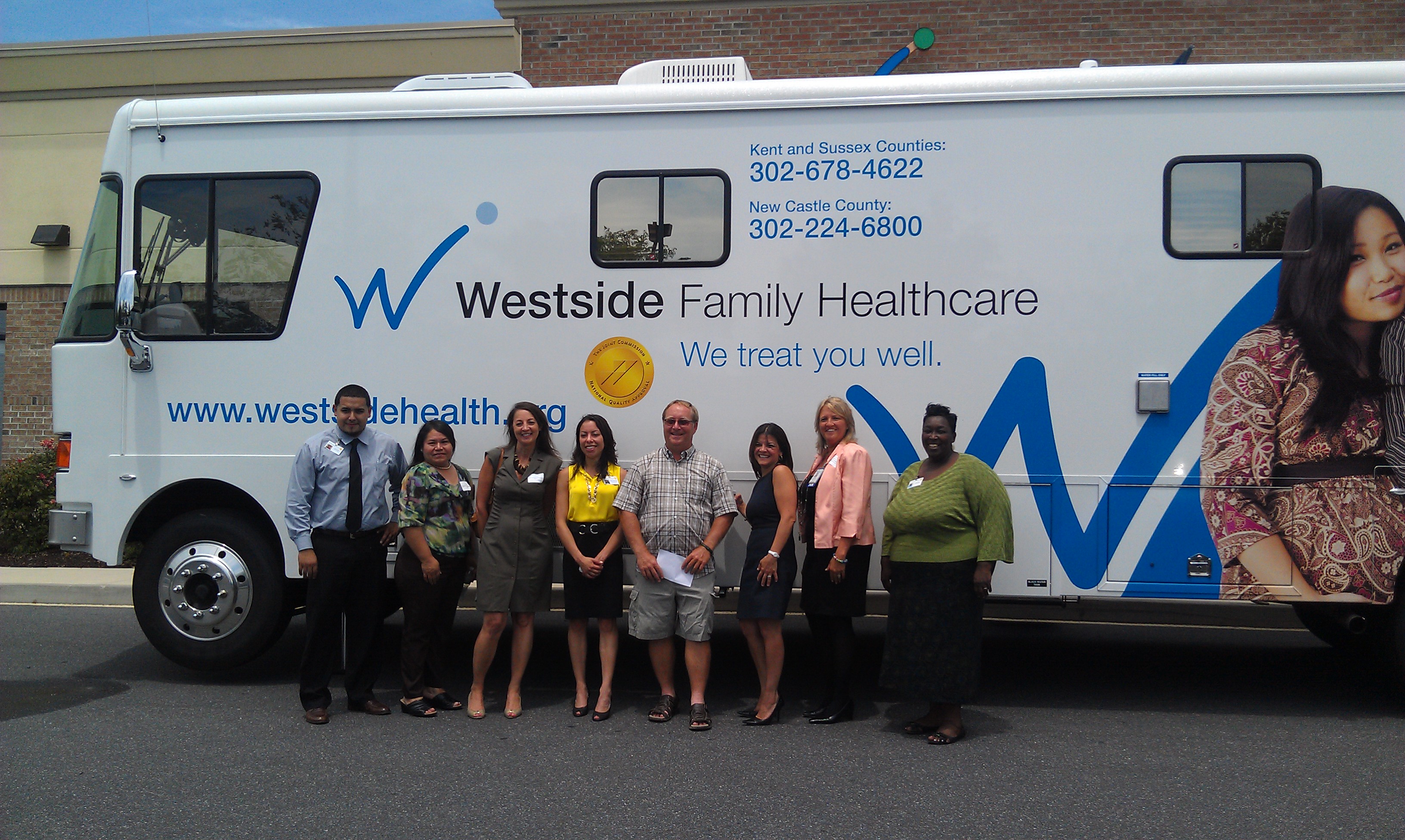
Westside Mobile Health Unit Ribbon Cutting
July 12, 2012
Fourth from right, Dave Marvel
First from right, Charita Olabiyi

*** See below for more info on Westside’s services and it’s campaign in Toyota’s 100 Cars for Good program. This video is awesome!

Celebrating Family, Farmer Dan, & Independence

Happy 4th of July from Little Wagon Produce and the Vanderwende Family! Where did May and June go? The spring months have been extremely busy on the farm. Farmer Dan laid out his vegetable plots, planted sweet corn as well as field corn and soybeans, and then fertilized everything. My brother, Breck, has been maintaining 2 greenhouses with 3 plantings of annual flowers, herbs, and vegetable transplants which will produce the squash, peppers, tomatoes, and eggplant for the summer business. Mom cleaned and opened our retail stand and is already in the regular flow of selling at 3 farmers’ markets close by. Almost all the summer vegetables came on 2 weeks early. We are still waiting for peppers and eggplant to ripen. And as usual, we are in desperate need of rain fall so monitoring irrigation systems is the current priority.

My family has also been busy, as we have celebrated many milestones recently. My grandmother healed from a broken leg, made it through physical therapy, and came home to the farm just in time for her 77th birthday on May 17. Farmer Dan turned 60 soon after on May 22! We combined his birthday celebration with Father’s Day and celebrated in the backyard at the farm. We threw up some tents, had a softball toss, played corn hole, and put his candles on a strawberry shortcake. As it turned dark, mom started a little bonfire for the grandkids to roast marshmallows. They loved it and even Farmer Dan brought out his old softball glove to have a catch!

Farmer Dan celebrating his 60th birthday and Father’s Day with strawberry shortcake and all four grandkids: Maci, Alanna, Aydan, and Brielle (Mom is in the background)

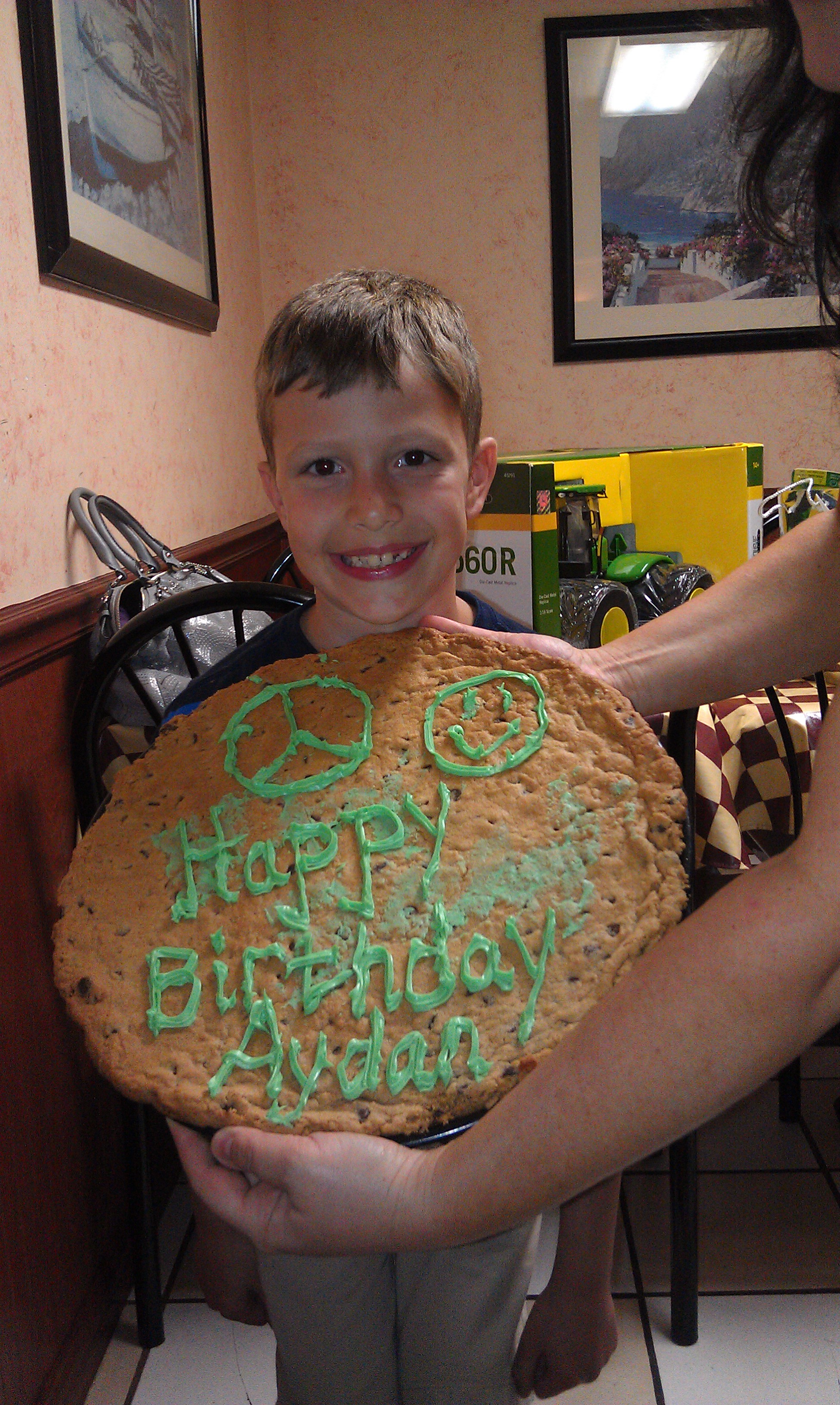
In June, my brother, Breck and his son, Aydan, celebrated birthdays. Breck turned 39 and Aydan turned 8! We celebrated at Cafe Tamburelli’s with pizza, spaghetti, and a chocolate chip cookie cake. We will have to start planning for Breck’s big 40th next year! 

Happy Birthday, Aydan!

And here it is July already. Several family birthdays are this month including my Uncle Garry, Jimmy, Donnie and even my own. But today was my brother-in-law’s, Shane, who turned 41. He is an “Independence Day Baby” so we combined the two occasions by celebrating at my sister, Danna, and his home tonight. We enjoyed their beautiful new pool and it was nice to relax in the middle of the week. 

Happy Birthday, Shane! Swimming with his girls, Maci and Brielle and his nieces, Savannah and Annabella.

But I can’t help but go back to Farmer Dan’s big milestone. He doesn’t like to talk about it but 60 years is a lifetime of knowledge, experience, and skills, especially in agriculture! I have been wanting to sit down and talk with him to pull some of these details out. Tonight was perfect because Shane’s family likes to talk history and reminisce, too, so I think they enjoyed joining the conversation. I prepared some short questions to highlight the past and the present. Here is what Farmer Dan had to say:

-If you weren’t a farmer, what do you think you would have done career-wise? I’ve really never thought about it but probably something with athletics, perhaps coaching or physical education. I also think I would’ve liked working in Cooperative Extension.

-What do you miss most about the days of agriculture when you grew up? It was less stressful. There were less financial pressures. It seemed like you could enjoy the work more.

-What is the biggest threat to ag in your opinion? Government regulations.

-What is the best part of being a farmer? Independence. Being your own boss. (Very fitting for the current holiday!)

-What is the most frustrating part of being a farmer today? Technology. All this new machinery has technology that none of us know how to work.

-What do you think future generations will need to succeed in agriculture? Computer skills, most certainly. More knowledge of the global market including global marketing.

-What do you think about women in ag today? Women have always been involved in ag-just more behind the scenes. They are coming to the forefront now because they are good at speaking up for ag rights, educating the public, and marketing products.

The conversation then went on to cover a little of everything. He likes to talk about how his grandfather grew a garden with strawberries and string beans. This is how he became interested in vegetable production. I also asked  him what he would do differently. He didn’t answer. Dad has never been one to talk much unless he’s talking about sweet corn, of course. But I’ll take his silence as he wouldn’t do a lot differently. He is an independent, successful farmer and gets to do what he loves everyday. He has a happy, healthy family (who likes to celebrate birthdays!).  On a day where we celebrate this great nation’s independence, I would also like to celebrate Farmer Dan’s. So here’s to you, Farmer Dan, and thanks for teaching me how to be independent, too.

Farmers’ Markets: Past, Present, Future Part I – Getting Started

Did you know there are 27 farmers’ markets in the First State? Many are opening this weekend, including the Western Sussex Farmer’s Market in Seaford. They’re popping up everywhere! So, have you visited one yet? If not, you might be missing out on what has become the nucleus of most downtown’s thriving economies. Last year, with only 16 markets, sales totaled $1.8 million. It’s like having your good old corner store, with a produce section, in walking distance of your favorite coffee shop, restaurant, bank, and bakery shops. I bet there’s one near you, with 12 new locations opening this summer. Check out the Department of Agriculture’s directory for locations and times.

But believe it or not, the idea is not new. Many markets such as Lewes and Milford began over ten years ago. I’ve had the pleasure to participate in several through my work with my parent’s business, Little Wagon Produce. I got the call to help my Mom in downtown Milford five years ago, as she could no longer handle the volume by herself. In 2001, she began to transport fresh produce to Milford every Saturday morning. It took years for her to establish the LWP  name in Milford and I’m proud to witness and learn from it.  The work  and time required has not been easy. In order to build this market over a decade, Mom had to be:

  1. dependable– this means you have to show up every week of the market. It allows customer’s to rely on you and what you offer. This is hard for small farmers who do not grow large volumes.
  2. communicative– you have to take the time to talk and listen to the customers to find out what they like, need, and want! Then you have to follow thru and either provide it or help them find it!
  3. educative– you have to take the time to help customers understand what you grow and what you do to get it to the market every week (planting, picking, packing, refrigerating, loading, fuel for transporting, labor, etc).
  4. collaborative– you have to support the market by working together with fellow vendors. Each week Mom makes a round to buy from other vendors and we love to send customers to other vendors. For example, we send customers to co-vendor Tracy Riley of Houston Country Gardens when they ask for perennial flowers, since we only grow annuals, and she does the same for us.
  5. and embedded in the community– it helps to know customers by name, where they work, and what happened last week in the news. We do not live in Milford, but we make it a priority to frequent its businesses and events often.

The best part about farmers’ markets is getting to know our customers. He or she could be the town mayor, a local school teacher, or a retired grandparent. They then go out into the community and tell everyone to go downtown for the “awesome sweet corn” from Little Wagon. Word of mouth truly is a small business’s best advertisement.

Personally, the market has afforded me many opportunities. I feel embedded in the Milford community myself. I have met several people I now consider friends, such as the local postmaster (he likes to hug me), a local news reporter (she likes to talk about running), and a fellow co-worker’s dad (he likes to pick on me and calls me “corn-girl”).  I love to be outside and I admit, its great exercise, too. Do you know how hard it is to pack and unpack two box trucks?!! It’s also my way of staying involved in the family farming business. I love to help customers understand the seasonality of produce and how to pick it. It’s great to be able to spend time with my family. Not only do I get to learn from Mom but I also get to see my grandfather, Pop-Pop Bob. He doesn’t like to miss a Saturday and gets several hugs and kisses from customers. I also have a good friend, Wendy, that shares my love for the market and comes every week to help us.  My younger sister, Amber, has recently joined in on the weekly ritual as well.

I plan to continue writing about farmer’s market activity throughout the summer. But I can’t end this post without saying thank you to all of our farmer markets’ customers. We appreciate your time and business and I hope my family can continue to serve local communities with fresh, local food for a reasonable price. In today’s world, I truly believe we take our easy access to food for granted.

Becky Vanderwende (Mom) at the 2005 Strawberry Festival explaining to the customer how to best care for the flowers she’s about to purchase.

Seaford Farmers Market

Mom and Dad always said to not be afraid to show customers our produce. We understand that people want to see that the product is good. I love showing them how full our ears are and how good it looks!

DE Ag Newsflash

Here’s a quick newsflash from the world of DE agriculture for you:

  • Mark Rieger has accepted UD’s offer to become the next Dean of the College of Agriculture & Natural Resources. I’m sure an official announcement will come soon. Until then, you can find out more about him on the “Official Dean Search” website page (I was personally impressed with his letter; however, you cannot access the video). You can also see the members of the search committee on this site (along right hand side).
  • There is a Senate Agriculture Committee meeting at Legislative Hall coming up on June 6 at 3pm. Previously mentioned bills regarding the Nutrient Management Commission (HB 286) and pesticide sales (HB 321) are on the agenda. Check this website for updates (times and meeting rooms change often!). Primary sponsors of these bills are both Republican; Rep. Dave Wilson and Rep. Harvey Kenton respectively, both from the Milford area.
  • In the poultry world, there’s a newly named President & CEO for Mountaire Farms, Inc. His name is Paul Downes and he most recently served as COO (Chief Operations Officer). See more here.
  • The longtime Vlasic pickle factory in Millsboro, DE  announced it’s closing this week. Not only will DE lose close to 300 jobs (150 full-time, 150 seasonal) but approximately 20 Eastern Shore farmers will have to decide whether to continue growing cucumbers. This plant opened in 1972, changed owners several times over the years, and apparently considered closing in 2010. However, a DE economic development grant of $90, 000 kept them open. Two years later, not the case. Michigan’s economic development office and union won the battle, which is where it will consolidate its pickle production. See the DE News Journal article here.
  • Have you visited a local farmer’s market yet? Many are opening statewide, including a new one slated for the Smyrna, DE area. I will blog more about this soon. In the meantime, see this Farmer’s Market Directory, offered by the DE Dept. of Ag. The strawberry season in DE has pretty much come to a close but broccoli, cabbage, cauliflower, green and yellow squash, and blueberries are soon to come!
  • Speaking of which, have you seen the new DE Dept. of Ag website? It has a new, fresh look and it’s about time!!! Take a peek here: http://dda.delaware.gov/

Joint Agriculture Committee Update-Part II

A week later, on March 28, the committee came together again. This time the agenda covered two extremely sensitive topics: animal welfare and nutrient management.

Dr. Carolyn Orr from the Council of State Governments (CSG) reported that a university study showed that the EPA overestimated the amount of nutrients from the poultry operations coming into the environment by about four folds.  THIS IS HUGE FOR DELMARVA FARMERS!!! Apparently the EPA was using a model that relies on feeding practices that are 25 years old. Poultry farmers are much more efficient in their feeding practices today.

Dr. Orr went on to address animal welfare issues and the animal rights movement, which she singled out as the biggest threat to ag in the US today. She stated the movement is emotion backed, not science backed. Several fast food chains have required their pork suppliers and egg suppliers to use gestation free facilities. She also reported that several states have made it illegal to get false employment in a facility for the purpose to video tape. Witnesses are also required to report videotaping within 72 hours.

Several guests were present such as Gary Warren of the DE Farm Bureau  and Cooperative Extension representatives. Important to note, there was also a  representative of the Humane Society of the US (HSUS) in attendance. House members present included Chair Atkins and Chair Bunting, Representatives Quinn Johnson, Harvey Kenton, Bobby Outten, Jack Peterman, and Dave Wilson. Senate members present were Bruce Ennis, Bob Venables and Gary Simpson.

*************************************************************************************************

All committee meetings are held on Wednesday afternoons, when in session, at Legislative Hall in Dover. They are open to the public. You can check the DE General Assembly website for updates on Committee meeting times and rooms (click on meeting schedules on left side tool bar). It’s updated daily and often you will see bills sneak in on committee meeting agendas or time changes at the last minute.  The Ag Committee for each chamber meets sporadically, either when a bill is introduced or when updates are needed. For example, there is a House Ag Committee meeting scheduled for tomorrow, Wed., May 9 at 4pm. See the agenda here

Joint Agriculture Committee Update-Part I

After my post this week on HB 282, I realized there’s nowhere to find Delaware Ag Committee minutes unless you actually attend the meetings. What farmer or agvocate has time to do that, especially in the spring, when planting is top priority? And none of our media outlets cover these meetings regularly. I don’t always have time to go either, but I’m usually attending some other committee, so occasionally I can slip in. Therefore, I’d like to share the minutes of two previous Ag Committee meetings in March. These convened as “Joint Agriculture Committee” meetings, meaning the individual House and Senate Committee members came together as one. I’ll give you a short summary in a two-part series.

*************************************************************************************************************

At the March 21 meeting, Secretary Kee seemed to lead the agenda (not the Chairs) and announced three pieces of legislation his department would like to implement in the near future:

  1. Replace one of the poultry representatives on the nutrient management commission with an equine industry representative (HB 282, which passed the House yesterday).
  2. Increase in the pesticide registration fee that manufacturers pay to the Dept. of Ag. (HB 321, just introduced Tuesday).
  3. Increase the fine for those who misuse pharmaceuticals in the thoroughbred industry. A second component to this would be an increase in license fees.

An update on the Young Farmers Program (YFP) was given. There are currently 10 young farmers with a total of 903 acres of land in the program. The State will loan up to $2.7 million at zero interest for them to buy their first farm. The farm will then remain in the Ag Lands Preservation Program (ALPP). In regards to this topic, the Secretary also mentioned the fact that the State has proposed to provide less funding to the ALPP, from $7 million to $1.5 million and to the YFP, from $3 million to $500,000.

In the poultry field, Secretary Kee gave an update on the Harim group, who bought Allen Family Foods. They have been operating profitably from week to week and may add another shift, which could provide more in state jobs. The Secretary then requested help to support the University of DE’s Lasher Lab in Georgetown, which is crucial to our state’s poultry industry because of its role in testing disease in Delmarva poultry flocks. They need $500,000 to continue their work. Several poultry representatives provided public comment to re-emphasize the needed support.

Legislators present were Chair Bunting (Senate) and Chair Atkins (House); Representatives Quinn Johnson, Harvey Kenton, Rebecca Walker, and Dave Wilson; Senators Bruce Ennis, Bob Venables, and Gary Simpson.

Who wasn’t there, but belongs on the committee? Representatives Bill Carson, Jack Peterman, Bobby Outten, Michael Mulrooney, and Senator Joe Booth.

Always interesting to see who attends and who doesn’t. Stay tuned for Part II soon……

DE House Agriculture Committee Update

As a quick follow-up to my previous blog, “Proposed Changes to DE Nutrient Management Commission”, House Bill 282 was released from the House Agriculture Committee meeting last Wednesday, April 25. In order to be released, it required a majority vote from the House Agriculture Committee members. Rep. John Atkins called the meeting to order. Rep. Dave Wilson, sponsor of the bill, quickly introduced the bill. Rep. Bill Carson made the motion to release this bill from committee. Rep. Quinn Johnson seconded. There was no discussion and no opposition. Other elected officials present were Rep. Bobby Outten, Rep. Harvey Kenton, and Rep. Jack Peterman. Secretary Ed Kee was in attendance as well as the Staff Administrator of the DE Farm Bureau, Ms. Pam Thornburg-Bakerian.  The bill will now be placed on the ready list or on the agenda, to be worked on the House floor. The meeting was adjourned.

Hopefully this won’t hurt poultry representatives in the long run when an important decision is made. However, I should share an article I read in the News Journal this week titled, “High prices, slow sales ground Delmarva poultry”…..

Check back for an update on DE Joint Agricultural Committee minutes soon.

Proposed Changes to DE Nutrient Management Commission

It’s hard to find a poultry farmer in New Castle County, which makes it hard to fill the Nutrient Management Commission. And so became House Bill (HB) 282, which changes the composition of the Commission.

As with many state boards and commissions, the Delaware Code relating to this Commission is very specific and can be very confusing. Bear with me! Currently, there are 15 total voting members on the Commission. One is the Director of the Division of Watershed Stewardship for DNREC. The 14 others are appointed by various elected officials. Of the 14 appointed, 7 must be full-time farmers. The 7 full-time farmers must be divided by county. For example, 2 must be full-time farmers from New Castle County, 2 from Kent County, and 3 from Sussex County.  Even more specifically, the 7 full-time farmers must consist of:

  • 1 dairy farmer
  • 1 swine producer
  • 3 poultry farmers
  • 2 row-crop farmers (1 grain and 1 vegetable)

If enacted, HB 282 would remove 1 poultry farmer from the Commission while adding 1 equine operation owner.  Currently, Delaware’s equine industry has no representation on the Commission. I’m assuming this change will cater to New Castle County because of a lack of poultry, swine and row-crop farming. In other words, representation for this county would have to come from the dairy and equine industries. While I understand the desire for representation of the equine industry and every county, I have concern for the representation of less poultry farmers. The fact is clear: poultry is Delaware’s #1 agricultural commodity. Of Delaware’s cash farm income, 73% was from broilers in 2009. We are 8th in the nation in the value of broiler production. As a matter of fact, broiler production began in Delaware. Need I say more?

Yet, this industry (and all of agriculture) is under pressure from federal regulation and environmental activists who say we need more rules for animal waste (i.e. nutrient management). Take yesterday’s DE State News, for example, which featured a guest commentary from a Washington DC environmental guru who blames agriculture as the top single contributor of nutrient pollution to the Chesapeake Bay. She cites poultry farmers specifically, claiming they grow too many birds and produce too much waste without controls on waste disposal. This is exactly the duty of the DE Nutrient Management Commission: to regulate activities involving the generation and application of nutrients in order to help improve and maintain the quality of Delaware’s ground and surface waters and to meet or exceed federally mandated water quality standards, in the interest of the overall public welfare. Therefore, I would advocate for more poultry farmers on this Commission; not less.

Have all other options been properly considered? Could the county representation requirement be changed? In other words, maybe there should only 1 full-time farmer from New Castle County represented? Perhaps the swine producer should be removed? I could be wrong, but I haven’t seen a large-scale pig farm in Delaware in a very long time (1980’s?).

DISCLAIMER: I guess I should go straight to the source. My grandfather co-chairs the Commission. I also have 3 family members who are poultry growers. I’ll do my homework. Until then, here’s a link to a list of members from the DE Dept of Ag website but it’s not current. This also made me wonder: Does the poultry industry have a registered lobbyist in Delaware to advocate for poultry growers in our state?  I looked it up under the Public Integrity Commission website. The answer is yes. It’s Bill Satterfield from the Delmarva Poultry Industry. I read their March 2012 newsletter, which explained that all current legislative efforts are focused in Maryland because of the dozens of bills that could affect the MD poultry industry. Too close for comfort, if you ask me……

“Smart Growth” in Delaware

It was so refreshing to attend the 4th annual DE HEAL summit today in Dover. HEAL stands for Healthy Eating & Active Living and is a coalition of 200 individuals who want to improve the health of Delaware. The theme of today’s summit was “Impacting Obesity through Environmental & Policy Changes”. Words I heard throughout the day were: land use planning, complete communities, walkable, bikeable, smart growth, open space, built environment, healthy living and more.

How does this topic relate to agriculture? Obviously, farmers are the key to providing the fresh food necessary to decrease obesity rates. But also because the idea of farmland preservation fits in perfectly with the idea of “smart growth“. There are individuals  and groups who are currently advocating to make communities more livable, INSTEAD of creating more developments on more land (also known as sprawl); leaving more space open and family farms intact. One such group is DE Greenways.  I sat in on their breakout session today and learned more about the work they’re doing in the Rehoboth Beach area. They are essentially helping to “retrofit” the land already developed at the beach to make the area more livable. How? By connecting existing roads and trails, creating bike and pedestrian friendly areas, and communicating these areas to the public. Ever heard of the Breakwater Junction Trail? DE Greenways advocated for this 6 mile trail, which connects Rehoboth and Lewes.

There is definitely a cost savings associated with improving current infrastructures. The further we sprawl, the further we must provide transportation, emergency, and medical services to residents. Along the same line of thinking, to ensure the future of Delaware agriculture, the preservation of farm land is essential. We are lucky to have a state preservation program, which was initiated in 1991. Twenty years later, Delaware has preserved almost 130,000 acres.  Smart growth ideals and farmland preservation principles go hand in hand.  We should advocate together!!!

All Good Things Must Come to an End

All within one event, several chapters came to an end this past Friday, March 16th:

  • A breakfast series, called “Friends of Agriculture”, sponsored by the University of DE Cooperative Extension. For several years, anyone from the community could come “listen and learn” to ag oriented speakers at early morning breakfast meetings. Previous speakers have been Governor Jack Markell, Senator Tom Carper, and the most recent presenter: DE Secretary of Agriculture, Mr. Ed Kee. The title of the presentation was, “Brazil’s Ag-to the Horizon”. The Secretary toured the country with 18 Delaware farmers to experience Brazilian agriculture first hand. The take-away? Brazilian farmers are good at what they do; ranking 5th in the world in grain production. However, they are grappling with transportation, preservation, and regulatory pressures. Much more so than American farmers. The Secretary concluded with this statement: “The Delaware and American Family Farm System is the world’s best ag system and we will continue to compete and thrive!”
  • The moderator for the series: Dr. Jan Seitz. She is the Director of Cooperative Extension and is retiring as of next month. She promises to remain a Delawarean in retirement and from what I understand, she has initiated a scholarship fund with the DE Community Foundation for in state students. She’s a strong advocate for Delaware agriculture, extension, and 4-Her’s!
  • The main supporter of the series: Dean Robin Morgan. She is the current head of the University of Delaware College of Agriculture & Natural Resources but also is retiring at the end of this academic year (May or June?). Her replacement has not been selected or announced as of yet but I’m guessing the announcement will come soon.

All of these good things are coming to an end. The continuation of the breakfast series will be up to the new Dean but perhaps it is time to revamp the series? I hope to broach the topic with some of the boards I serve on. Youth involvement or some sponsorships could make it happen.  Let me know if you have any ideas: cvanderwende@hotmail.com.